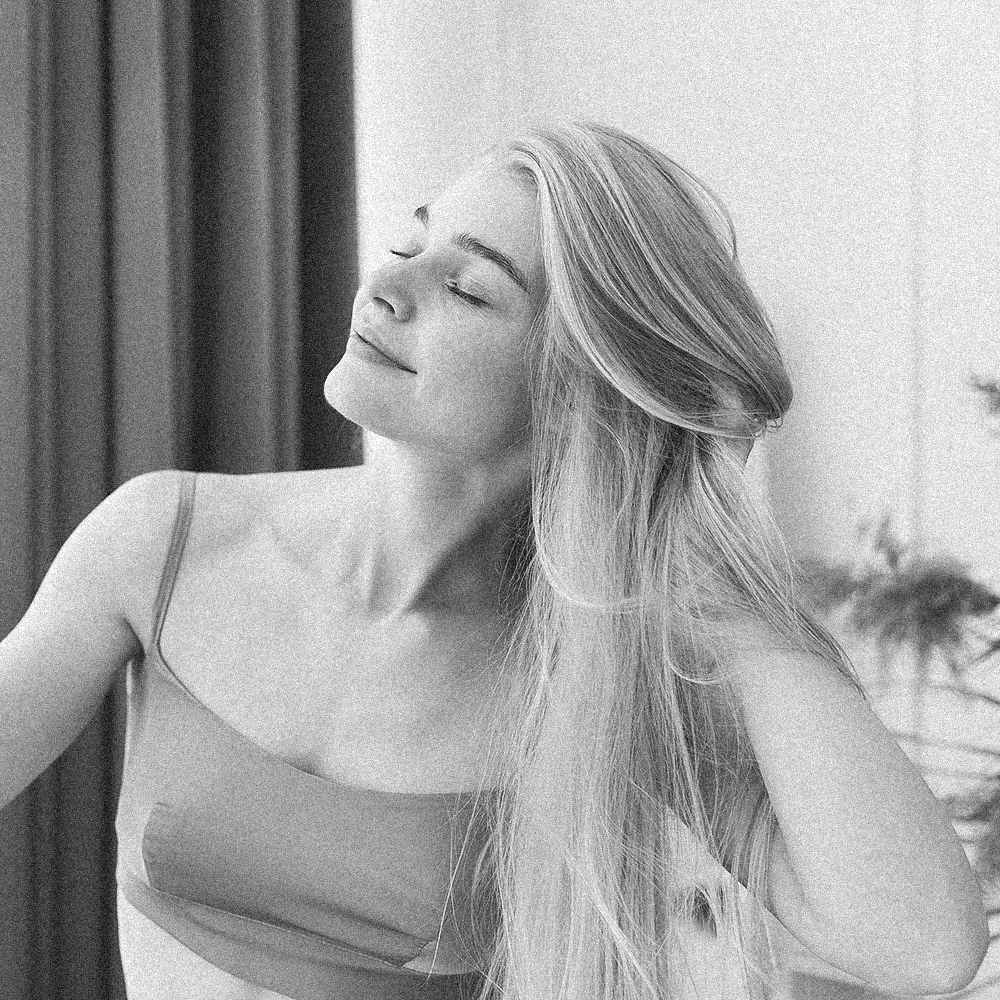
There are gestures we make almost without thinking. One of these is that final spritz of perfume before leaving the house: wrists, neck… and sometimes, almost instinctively, a quick spray on your hair. We do it because it works, because the scent lasts longer, because something in us knows that hair and fragrance get along well. But how good is it for your hair, really? Is there a right way to do it, or are we playing with fire without even realising it?
Why does hair retain scent better than skin?
The skin perspires, produces sebum, and its pH changes throughout the day. All of this influences how a fragrance evolves on it. Hair, on the other hand, is porous and static: it doesn't secrete anything, it doesn't alter the chemical composition of the perfume, it simply absorbs it and holds onto it. That's why, when an aromatic molecule adheres to the hair fibre, it tends to stay there for hours, releasing gently with every movement.
There's a physical aspect to all of this: hair has a much larger surface area than skin, which multiplies the points of contact with odour molecules. And because it's constantly moving – in the wind, when you turn, when you walk past someone – it acts like a small, natural diffuser that continuously releases the scent into the air.
In classic perfumery, this has always been known. Before modern flacons existed, it was common practice to perfume clothes, gloves… and hair. It wasn't a whim; it was olfactory strategy.
The real problem: alcohol and hair health
Here's the part that deserves a moment of attention. Most perfumes – eau de parfum, eau de toilette – have alcohol as their base. And alcohol, applied directly to the hair habitually, can dry out the hair fibre, make it lose its shine and, over time, make it more fragile and brittle.
This doesn't mean that an occasional spray will destroy your hair. It means that if you make it a daily habit—especially if your hair is already dyed, heat-treated, or naturally dry—you might notice unexpected consequences over time.
Signs to watch out for:
- Hair that feels rough to the touch after applying perfume.
- Dry tips more than usual with no other apparent cause.
- Progressive loss of shine, especially in fine or very porous hair.
None of this has anything to do with the quality of the fragrance, but rather with its formulation. A wonderful niche perfume can have exactly the same concentration of alcohol as a conventional one. The problem isn't the scent: it's the vehicle.
How to apply fragrance to your hair without damaging it
If you want to keep perfuming your hair – and it makes perfect sense that you would – there are smarter ways to do it.
The first and simplest: spray the perfume into the air, about 20–30 cm from your hair, and walk through the cloud. This way, the scent falls onto your hair more diffusely, without concentrating the alcohol in one specific spot.
The second: avoid applying it to the roots. The ends and mid-lengths tolerate contact with perfume better, and they are also the parts that move the most and diffuse the scent best.
The third—and probably the cleverest—is to use products specifically designed to fragrance your hair. They exist for a reason.
Hair perfumes: are they really different?
Yes. And the difference matters more than it seems.
A hair mist —a perfumed hair mist— is formulated without alcohol or with a minimal concentration of it, and usually includes ingredients that care for the hair fibre while perfuming: vegetable oils, hydrating agents, heat protectors, and active ingredients that provide softness and shine. They are not simply diluted perfumes: they are products specifically designed for the hair environment.
Furthermore, the projection of a hair mist is typically softer and more enveloping than that of a traditional EDP. This results in a more intimate scent, closer to the body: the aroma is present, but not overpowering. It's noticeable when someone gets close. This discretion has its own allure.
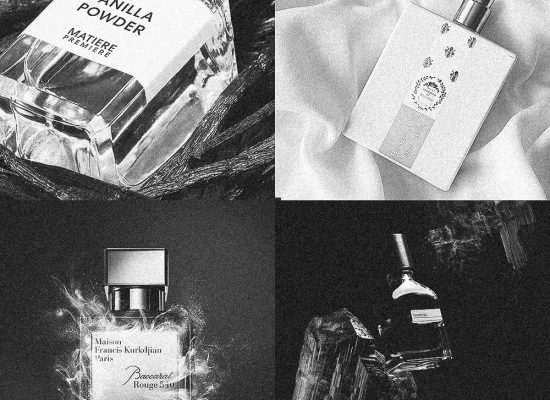
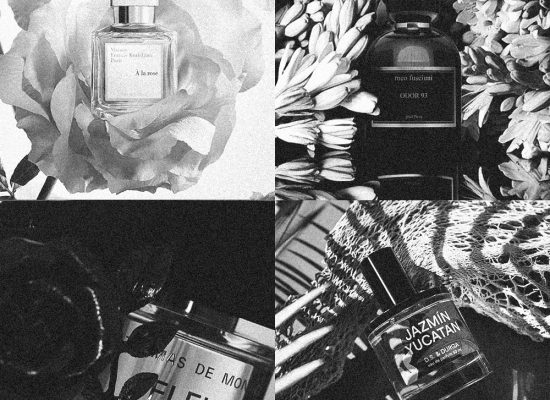
There are different options that illustrate this universe well. The Carnal Flower Hair Mist from Frédéric Malle —based on the iconic floral fragrance of the maison— envelops the hair in a trail of tuberose and jasmine that lasts for hours, with a light formula that won't weigh it down or dry it out. And the Aqua Universalis Hair Mist From Maison Francis Kurkdjian, enriched with castor oil, it delicately perfumes with that characteristic citrus freshness while caring for your mane. Two examples of how niche perfumery has managed to enter this territory without losing an ounce of its demanding standards.
Quelles sont les meilleures senteurs pour les cheveux et pourquoi ?
Not all olfactory families behave the same on hair. Here are some guidelines to bear in mind:
Floral and aquatic. They work very well. Their scent notes are light and ethereal, and when they interact with hair movement, they create a fresh and natural trail. They are the most intuitive to wear in your hair during the day.
Woody and oriental. They are a powerful choice for the evening. The base notes – sandalwood, oud, amber, patchouli – adhere particularly well to the hair fibres and create a very long-lasting and sensual olfactory trail. However, use in moderation: the intensity can multiply on hair.
Pure citrus. The most fleeting. The top notes —bergamot, lemon, grapefruit— are volatile by nature and evaporate quickly from any surface. If you like citrus scents in your hair, look for versions with a more solid base to anchor them.
The general rule is simple: the more complex and dense the base of a fragrance, the better it will perform on hair in terms of scent longevity.
Something few people notice: the olfactory trail we leave as we move
In perfumery, there's a term for that which someone leaves behind when they walk past: the sillage. The trail. That invisible cloud that floats in the air for a few seconds after someone has left. It is, perhaps, the most poetic way to understand how we relate to scent.
When we perfume our hair, that sillage changes completely. It's no longer just the pulse point on the wrist or neck that projects. It's the entire silhouette in motion: the hair as you turn, bend down, greet someone. The scent travels with the whole body in a different way, more dynamic, more present.
There are people who, without knowing exactly why, leave a more pronounced olfactory footprint than others. Often, the secret lies there: in the hair.
And perhaps that's the most interesting thing about all of this. It's not just about smelling good for more hours, but about asking ourselves what kind of olfactory presence we want to leave behind. If perfume is a form of communication – and in many ways it is – then hair is one of its most subtle and effective channels.
So yes, it makes sense to perfume your hair. But, as with almost anything worthwhile, the key is to do it consciously.